
Knoxville Criminal History
Knoxville criminal history records come from the Knoxville Police Department, Knox County courts, and statewide Tennessee systems. The city gives you a direct path for police records, crash reports, and some local background checks. Court records live with the county clerk offices, so a good search often starts at the police desk and then moves to the court file. If you know the date, charge, or case number, you can move faster. Knoxville is a good records city, but the record path still depends on the type of file you need.
Knoxville Criminal History Quick Facts
Knoxville Criminal History at KPD
The Knoxville Police Department Records Unit is the main city source for Knoxville criminal history records. It is located at 1650 Huron Street, with records mailed to 1617 Saint Mary Street. The city also offers a NextRequest portal for non-standard requests. That gives you several ways to reach the same office. If you need an incident report, arrest record, or crash report, the police records unit is usually the place to start.
The local process is simple once you know the lane. In-person requests work well if you want to talk through the file. Mail requests work if you already know the report details. The portal works if you want a paper trail and electronic tracking. Knoxville also handles local criminal background checks through the police department. Those checks are only for city matters, so they do not replace a statewide search. For a full picture, you still need TBI and court records.
| Police Department | Knoxville Police Department 800 Howard Baker Jr. Avenue, Knoxville, TN 37915 |
|---|---|
| Records Unit | 1650 Huron Street, Knoxville, TN |
| Mailing Address | 1617 Saint Mary Street, Knoxville, TN 37917 |
| Phone | (865) 215-7231 |
| smcclain@knoxvilletn.gov | |
| Hours | Monday-Friday, 8:00 AM to 4:00 PM |
For records tied to the city police file, the Knoxville Police Department records page is the right place to begin.
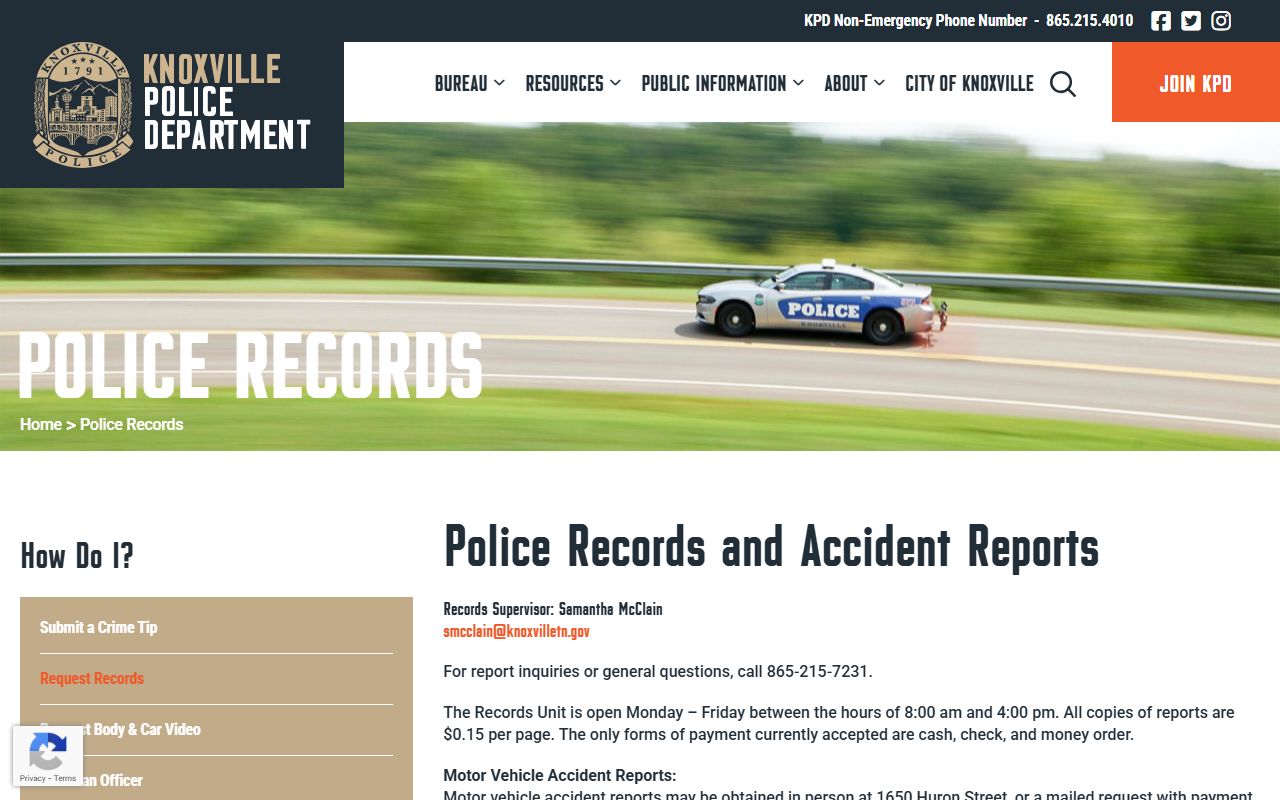
This records page is the first stop for local police files, crash reports, and request rules.
How to Search Knoxville Records
Knoxville gives you a few search paths, and the best one depends on what you want. For a city report, use the Records Unit. For a broader request, use NextRequest. For a traffic crash, use the state crash system. For a criminal history trail, combine the police file with the court docket. That keeps the search clean. A local search that stops too soon can miss the court result or the state record.
Knoxville's NextRequest portal supports electronic submission for non-standard requests, and staff respond within seven business days. That is useful when a file does not fit the usual request form. The police department also says some documents can be emailed at no cost, while copies, media, and local background checks have separate fees. If you are working from an old report, include the date, place, and any report number you already have. Those details matter more than a long explanation.
For a Knoxville crash report, the state system at purchasetncrash.gov can be the fastest route. Research also notes that certain unredacted crash reports are controlled by T.C.A. § 10-7-504(a)(31). That statute matters because it explains who can receive a full report and who gets a redacted version.
To keep the request on track, gather the basics first:
- Full name of the person involved
- Date or rough date range
- Location of the incident or crash
- Report number if you have it
- Type of record you want
For the city portal, Knoxville's NextRequest system is the main online route for non-standard records.
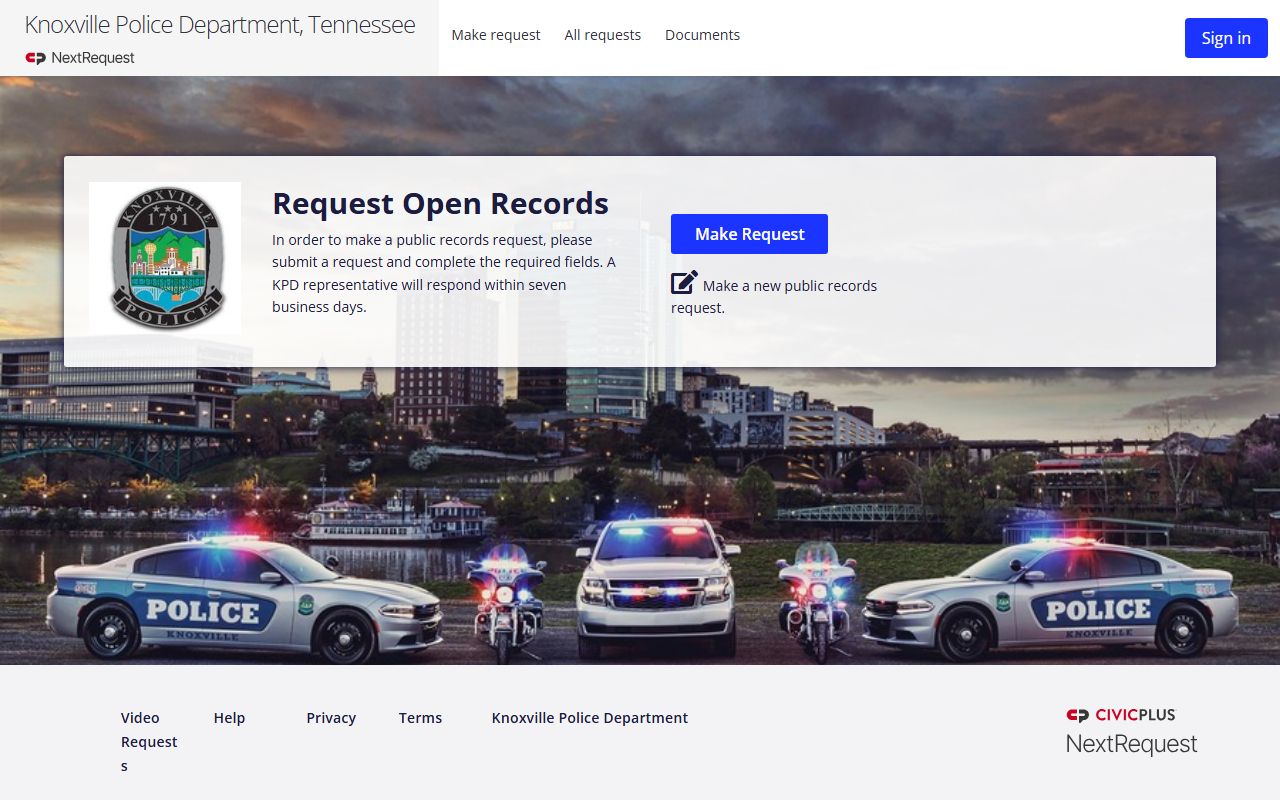
That portal is useful when you want a tracking number and an electronic record of your request.
Knox County Criminal History Records
Knox County court records are the other half of a Knoxville criminal history search. The Knox County Criminal Court Clerk handles criminal court records, while the Circuit Court and Chancery Court keep their own files. Research says the criminal court clerk office can handle most records for Criminal Court, General Sessions-Criminal, and Fourth Circuit Court. That is where you go when the police record is not enough. The court file shows the charge path, the docket, and the final disposition.
Knox County court offices are spread across downtown Knoxville. The criminal court clerk is at 400 Main Street SW, Suite 149, and the circuit court clerk is at P.O. Box 379 in Knoxville. The Chancery Court Clerk & Master works at the City-County Building. If you need a complete criminal history picture, the court file often fills in what the police report leaves out. Court records can show plea dates, hearing dates, and case outcomes. That is why the court side matters so much in Knoxville.
Statewide court access is still part of the search. The Tennessee court system at tncourts.gov is the main hub, and the statewide public case system can help if you are tracking appellate records or looking for general court guidance. For criminal history records, the key is to ask for the court that actually heard the case. That is usually the fastest route.
Knoxville court offices also help with juvenile and civil files, but criminal history searches should stay focused on the criminal division first. Once you know the court division, the clerk can narrow the file set and save you time.
Tennessee Criminal History Sources
Knoxville records work best when you add the state layer. The Tennessee Bureau of Investigation is the central repository for criminal history information in Tennessee, and the TORIS system gives the public a way to request a statewide check. That matters when a person has cases in several counties or when the local file looks incomplete. A Knoxville record may show the arrest, but the state record can show the wider path.
Use the state tools one by one. TBI background checks are the main statewide entry point. TORIS is the name-based public search. FOIL shows felony offender information. The Sex Offender Registry gives registry data. VINELink helps with custody notices. Each one answers a different question.
Knoxville searches also run into expungement and juvenile transfer issues. If a record looks thin, it may have been sealed or expunged. The rule to review is T.C.A. § 40-32-101. If a juvenile case moved to adult court, T.C.A. § 37-1-134 may explain why it appears in the criminal history file. Those two statutes are often the reason a Knoxville search does not match the story a person expects.
That is why good Knoxville searches use both local and state records. One office rarely has the whole answer.
Knoxville Public Records Limits
Knoxville public records are open, but not everything is public. Active investigations, juvenile files, sealed case material, and certain personal data can be withheld or redacted. That is true for police records and court records. If you ask for the wrong thing, the answer may come back partial. If you ask for the right record type, the response is usually more useful. A small change in wording can make a big difference.
Note: Knoxville crash reports, incident reports, and arrest records are easiest to find when you know the date, the location, and the agency that created the file.
For city access rules, use the Knoxville Police Department records page, the NextRequest portal, and the Tennessee court system together. That gives you the best shot at a full Knoxville criminal history search.